
Pickleball is growing because it is easy to learn, social, affordable, and friendly to different age groups. That growth is good for community recreation, but it also creates a problem many players rarely think about: what happens to all the cracked, warped, and worn-out pickleballs after they leave the court?
A single pickleball seems too small to matter. But when thousands of players are practicing, competing, coaching, and running clinics every week, those small plastic balls add up quickly. For a deeper look at why this issue is difficult to solve, this guide on pickleball recycling challenges and sustainable solutions explains why damaged balls often end up outside normal recycling systems.
The environmental impact of discarded pickleballs is not only about one broken ball in a trash can. It is about scale, material design, product lifespan, disposal habits, and whether the sport can grow without leaving behind unnecessary plastic waste.
Why Are Discarded Pickleballs an Environmental Concern?
Discarded pickleballs create environmental concern because they are usually made from durable plastic, wear out during regular play, and are not commonly accepted by standard curbside recycling programs. Once cracked or warped, many balls are thrown away and sent to landfills.
The problem grows as participation grows. More players mean more games, more drills, more tournaments, and more replacement balls. Without better reuse and recycling habits, pickleball’s popularity can quietly increase plastic waste.
Why Pickleball Waste Is Becoming a Bigger Issue
Pickleball’s rise is part of a broader shift toward accessible racket sports. More communities are turning unused courts into active recreation spaces, and players are choosing sports that support shorter sessions, social play, and flexible participation. This trend is visible in places like San Angelo, where racket sports are being discussed as part of a larger recreational movement toward usability, community engagement, and smarter court use. You can see that broader context in this blog on why racket sports are exploding in 2026
That growth changes the waste equation.
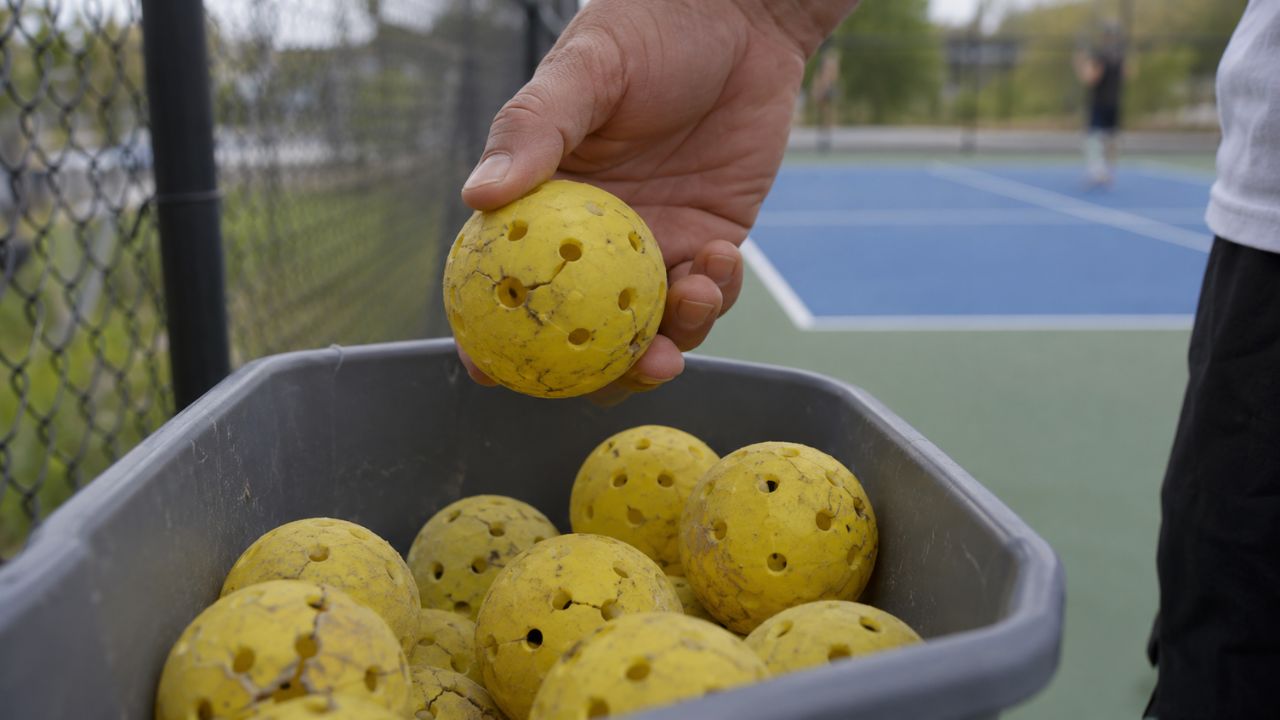
A casual player might use only a few balls over time. A club, coach, facility, or tournament can go through far more. Outdoor balls can crack from repeated impact, rough court surfaces, temperature changes, and regular hard play. Once a ball loses its shape or bounce, it is no longer useful for fair games.
The more organized the sport becomes, the more important disposal becomes. A growing sport needs more than new courts and better equipment. It also needs responsible systems for what happens after equipment wears out.
What Are Pickleballs Made From?
Most pickleballs are made from hard plastic materials designed to create bounce, durability, and flight consistency. Outdoor balls are usually firmer and built to handle rougher surfaces, wind, and faster play. Indoor balls are typically softer and lighter.
That durability is good during play, but it creates a problem after the ball breaks. A product designed to resist impact does not simply disappear when thrown away. If discarded carelessly, it can sit in landfills for a long time or break into smaller plastic fragments over time.
This is the tradeoff: players need balls that perform consistently, but the sport also needs better thinking around material use, product lifespan, and responsible disposal.
Why Standard Recycling Often Does Not Work
Many players assume a cracked pickleball can go into a normal recycling bin. In most cases, that is not reliable.
Pickleballs are small, hollow, lightweight, and perforated. These features are great for gameplay, but they can make recycling difficult. Sorting systems are often designed for common packaging items such as bottles, containers, and cardboard. A used pickleball may be too small, too dirty, or too oddly shaped for standard processing.
There is also the issue of plastic identification. If a ball does not clearly fit into a recycling stream, it may be rejected. Even when the material itself has recycling potential, the collection and sorting process can prevent it from being reused.
This is why better recycling often requires dedicated collection programs, club-level bins, or partnerships with organizations that know how to handle sports equipment waste.
The Hidden Impact of Throwaway Court Culture
Pickleball has a friendly, low barrier image, and that is one of its strengths. But casual play can sometimes lead to casual disposal.
A ball cracks during a match. Someone tosses it near the fence. Another ball loses bounce during a drill. It goes into the nearest trash can. A coach cleans out a bag after a clinic. A dozen unusable balls are dumped without a second thought.
None of those choices feels major in the moment. The impact comes from repetition.
Throwaway court culture creates three problems:
- It normalizes waste as part of play.
- It hides the true volume of discarded balls.
- It delays better solutions because no one tracks the problem.
The first step is awareness. Clubs and players cannot reduce what they do not notice.

How Players Can Reduce Pickleball Waste
Reducing pickleball waste does not require complicated behavior. It starts with better habits.
Players can keep a separate bag or container for cracked balls instead of throwing them away immediately. Some worn balls can still be used for low-intensity drills, beginner practice, target training, or off-court activities. Coaches can use older balls for feeding drills where a perfect bounce is less important.
Players can also rotate balls during practice to spread wear more evenly. Instead of using one ball until it cracks, rotating several balls can help extend usable life across a set.
Buying better-quality balls can also reduce waste. If a ball lasts longer, holds shape better, and performs consistently over more sessions, fewer replacements are needed. Players looking for more responsible equipment choices can explore Sustainable recycled pickleballs designed around durable play, consistent bounce, and more conscious material use.
The goal is not to make players feel guilty. The goal is to make better choices easier.
What Clubs and Facilities Can Do
Individual players matter, but clubs and facilities can make the biggest difference because they see the highest volume of ball use.
A simple collection bin near the courts can change behavior quickly. When players see a labeled container for used pickleballs, they are more likely to separate damaged balls from regular trash. Clubs can then sort those balls for reuse, donation, upcycling, or specialized recycling programs.
Facilities can also create clear policies for ball disposal after leagues, clinics, and tournaments. Instead of leaving waste management to individual players, organizers can collect used balls at the end of events.
Schools, youth programs, artists, animal shelters, and beginner clinics may also find uses for balls that are no longer suitable for competitive play. Not every ball needs to go directly from court to landfill.
Can Pickleball Become a More Sustainable Sport?
Yes, but not by accident.
Pickleball has several advantages from a sustainability standpoint. It uses smaller courts than tennis, supports local community play, and does not require massive equipment. Many games happen close to home, which can reduce travel compared with destination-based sports.
But the sport also has challenges. More courts mean more surface materials, lighting, fencing, and maintenance. More players mean more balls, paddles, shoes, bags, and apparel. More tournaments mean more packaging, shipping, and event waste.
The future of sustainable pickleball depends on several shifts:
- Longer-lasting equipment.
- Better end-of-life collection.
- More recycled and recyclable materials.
- Local reuse programs.
- Smarter purchasing by clubs and players.
- Less wasteful event operations.
Sustainability should not be treated as a separate topic from performance. The best future for the sport is one where players can enjoy reliable equipment while reducing unnecessary waste.
What Responsible Players Should Take From This
Discarded pickleballs are a small object with a larger message. They show what happens when a sport grows faster than its disposal systems.
The answer is not to play less. It is to play smarter.
Use balls fully before replacing them. Set aside cracked balls instead of throwing them away immediately. Support clubs that collect and reuse equipment. Choose durable balls that do not need to be replaced as often. Encourage facilities to think about waste the same way they think about court scheduling, lighting, and maintenance.
Pickleball became popular because it feels welcoming and community-driven. That same community can help shape a cleaner version of the sport. Every cracked ball placed in the right bin, reused in a drill, donated to a program, or kept out of the trash moves the game in a better direction.